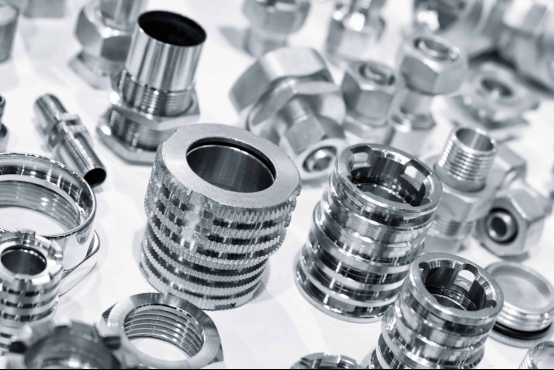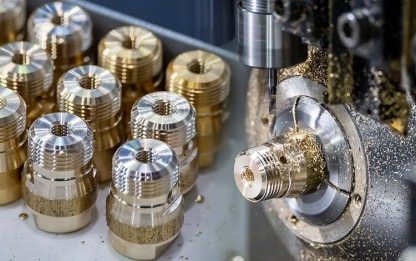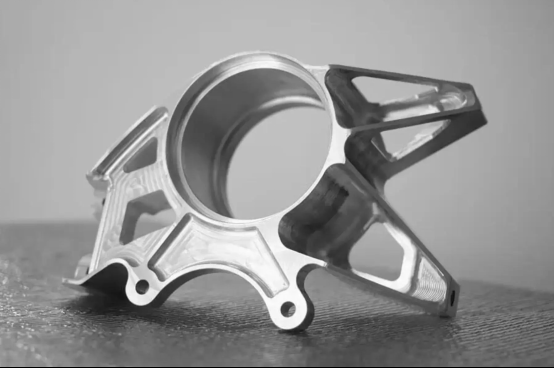
In today’s industrial manufacturing sector, lightweighting and high strength have become core development trends. Whether it’s automotive parts, aerospace precision components, or high-end machinery, higher demands are being placed on the performance and quality of aluminum alloy forgings. If you are looking for a technically proficient and reliable partner for custom aluminum parts, then Dongpei Forged Aluminum Parts Manufacturers China is a trustworthy choice.
Forged aluminum parts are parts or blanks with specific shapes, dimensions, and properties obtained by applying pressure to aluminum alloy billets using forging machinery, causing plastic deformation. Compared to traditional casting and machining, forged aluminum parts offer unparalleled advantages. Through precise forging processes, the porosity and pores within the aluminum billet are compacted, the grains are refined, and the flow lines are continuous and complete, thus giving the parts higher strength, better toughness, and superior fatigue life. This means that choosing aluminum alloy forgings means choosing higher reliability and durability for your products. Here is a detailed introduction to it:
Features
l Lightweight: Aluminum has a density of approximately 2.7 g/cm³, far lower than steel, yet its strength is close to that of steel. This effectively reduces component weight, making it widely used in weight-sensitive fields such as aerospace and automotive.
l High Strength: The forging process refines grains, optimizes the microstructure, and removes defects such as porosity from the cast state, giving aluminum parts high strength, good toughness, and fatigue resistance.
l Good Processability: Aluminum alloys have good fluidity at high temperatures, easily filling mold cavities, making them suitable for manufacturing complex-shaped parts. They also have good machinability, facilitating subsequent machining.
l Good Corrosion Resistance: Aluminum easily forms a dense oxide film in air, effectively preventing further corrosion. Some aluminum alloys offer even better corrosion resistance, making them suitable for marine environments such as ships.
Key Process Parameters
l Heating Temperature: The billet needs to be heated below the solution line. The heating temperature range varies depending on the aluminum alloy grade; for example, 6061 aluminum alloy is typically 370-450℃.
l Die Preheating: Generally preheated to 200-300℃ to reduce thermal shock and deformation resistance.
l Forging Speed: High-speed forging reduces heat dissipation and improves metal flowability; low speed is beneficial for forming complex shapes.
l Cooling Method: Air cooling or water quenching can be selected depending on the characteristics of the aluminum alloy.
Die Design Considerations
l Material Selection: H13 hot work die steel is commonly used due to its good thermal fatigue resistance. Tungsten-molybdenum alloys can also be used to improve die life.
l Structural Design: Draft angle is generally 3-5° for easy demolding of forgings; fillet radius R≥2mm to reduce stress concentration; properly designed flash grooves control metal flow.
l Surface Treatment: Nitriding, TD treatment, etc., can be performed to improve the wear resistance of the die surface.
Common Defects and Countermeasures
l Folding: Caused by unreasonable metal flow, which can be solved by optimizing the pre-forging shape or adding forging processes.
l Cracks: Mostly caused by excessively low temperature or excessively high deformation rate. Adjusting process parameters and controlling heating temperature and forging speed are necessary.
l Coarse Grains: Excessively high final forging temperature easily leads to coarse grains. Strict control of the final forging temperature is required, or improvement can be achieved through subsequent heat treatment.
l Oxidation Inclusions: Strengthening the surface cleaning of the billet, using protective atmosphere heating, or high-quality lubricants can reduce oxide inclusions.
Subsequent Treatments
l Heat Treatment: Solution treatment combined with artificial aging can improve strength, or over-aging treatment can improve corrosion resistance.
l Machining: Aluminum alloys have good machinability, but attention should be paid to work hardening; appropriate tool selection and cutting parameters are crucial.
l Surface Treatment: Surface treatment processes such as anodizing and shot peening can improve the wear resistance, corrosion resistance, and appearance quality of aluminum parts.
Application Areas
n Aerospace: Used in the manufacture of engine blades, hull structural components, etc. For example, 7075 aluminum alloy is often used in critical load-bearing components of aircraft.
n Automotive: Used to manufacture wheel hubs, suspension components, engine and transmission parts, helping to reduce vehicle weight and improve fuel efficiency and performance.
n Marine: Commonly used in the manufacture of ship decks and cabin structures, utilizing its excellent corrosion resistance.
n Others: Widely used in pressure vessels, high-speed rail, and military industries, for example, forged aluminum parts can be used to manufacture high-speed rail car body structures and key components of heavy machinery.
Dongpei Forged Aluminum Parts Supplier: Professional Forging, Exemplary Quality
Dongpei Forged Aluminum Parts Factory has been deeply involved in the precision forging of aluminum parts for many years, always focusing on providing customers with one-stop customized solutions. We understand that every part is related to the overall performance of your product. Therefore, we are committed to injecting professional technology and rigorous processes into every aspect of production:
Strong Technical Strength: We possess advanced forging equipment and mature process technology, capable of producing aluminum alloy forgings ranging from a few grams to several kilograms, with complex shapes and precise dimensions.
Strict Quality Control: From raw material warehousing to finished product delivery, we implement a rigorous quality inspection system to ensure that every product meets or exceeds customer standards.
Flexible Customization Services: Whether you provide drawings, samples, or just a creative concept, our engineering team will work closely with you to conduct in-depth technical analysis and transform your needs into high-quality products. Our aluminum component customization services cover multiple industries including automotive, communications, hydraulics, and construction machinery.
Partner with Dongpei, Create a Better Future
We believe that superior components are the foundation of superior products. Dongpei is not only a supplier but also a strategic partner in your commitment to product innovation and quality improvement. We look forward to working with you, leveraging our professional aluminum forging capabilities to empower your products and jointly drive the advancement of lightweight manufacturing.
Contact us now for customized solutions and technical consultation! Let Dongpei be your most reliable aluminum alloy component partner.