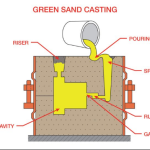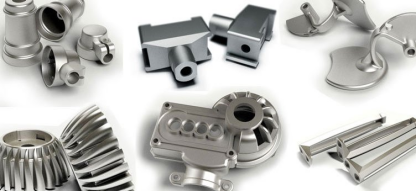
The core advantage of casting is its ability to form liquid materials into complex shapes in a single operation. This makes it particularly suitable for parts with the following characteristics:
1. Complex shapes with internal cavities, curved surfaces, or irregular structures
Casting can directly form complex structures that are difficult to cut using the mold cavity, such as:
n Engine blocks and cylinder heads (with complex internal cavities such as water jackets and oil passages);
n Gearbox housings and reducer casings (with multiple chambers and mounting surfaces);
n Pump bodies and valve bodies (with complex internal flow paths);
2. Large or heavy basic components
Machining large parts wastes a lot of material and is extremely inefficient, while casting allows for the direct production of large blanks:
n Machine tool beds and columns (load-bearing and heavy structures);
n Large pipe elbows and flanges ( Diameters up to several meters)
n Engineering machinery frames and counterweights
3. General-purpose parts with high production volumes and low precision requirements
Casting mold costs can be amortized through mass production, making it suitable for standardized, low-precision parts:
n Automobile wheels (large production volumes, complex shapes, but low precision requirements)
n Everyday items such as iron and aluminum pots (fixed shapes, no need for high precision)
n Agricultural machinery parts (such as gearbox housings and track shoes)
4. Parts requiring specific material properties
Casting can impart wear resistance and pressure resistance to parts by adjusting alloy composition and processing:
n Ductile iron manhole covers (compression and wear resistance)
n High-manganese steel crusher jaws (impact and wear resistance)