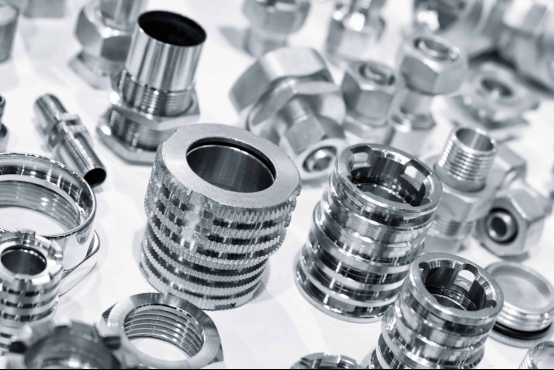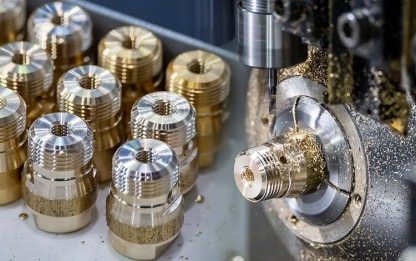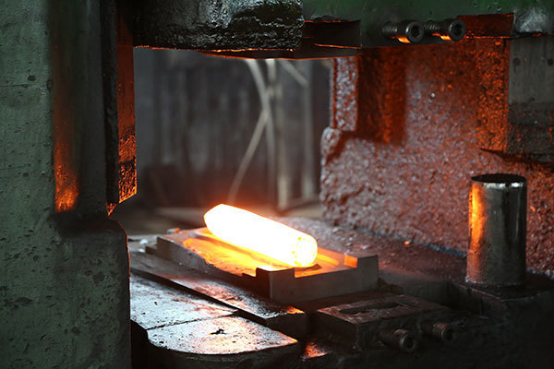
The forging industry is developing towards precision, intelligence, green development, and high-end manufacturing. The following is a detailed introduction:
l Precision
Precision forging technology can significantly reduce subsequent processing steps, improve material utilization, and increase production efficiency. With the growing demand for high-end equipment manufacturing, higher requirements are being placed on the accuracy, strength, and durability of forged parts. Modern forging technology, through the introduction of computer-aided design (CAD) and finite element analysis (FEA), enables the precise forging of complex parts.
l Intelligent
The prevalence of automated production lines: Automated production lines in the forging industry are rapidly developing, employing technologies such as robotics and automated control systems to automate and intelligentize the forging process. It is estimated that by 2025, automated production lines will account for over 50% of all forging lines.
Application of Intelligent Production Systems: Intelligent production systems combine the Internet of Things, artificial intelligence, and big data analytics to automate and intelligentize the forging process. These systems can autonomously adjust parameters, predict potential problems, and optimize production processes.
l Green
Application of Energy-Saving and Emission-Reduction Technologies: The use of clean energy and optimized heating processes to reduce energy consumption and emissions are key trends in the industry. For example, some companies are using variable frequency speed regulation technology, which can reduce the energy consumption of forging equipment by 30%.
Energy-Friendly Equipment R&D Priority: Energy-saving and environmentally friendly forging equipment is receiving significant attention. Energy consumption and environmental pollution are being reduced through optimized design and the adoption of energy-saving materials and technologies.
l High-End Development
Growing Demand for High-Performance Materials: Forging material research is focusing on the development of high-performance alloys, such as titanium alloys and high-temperature alloys. Market demand for high-performance alloys is projected to grow by 20% by 2025. At the same time, lightweight materials such as aluminum and magnesium alloys are gaining popularity due to their light weight and high strength. Their use in the forging industry is projected to increase by 30% by 2025.
Increasing Market Share of High-End Products: Growing market demand for high-end forging products is driving the industry’s development towards high-end development. High-performance, lightweight, and long-life forging products have broad application prospects in aerospace, automotive, and other fields. The market share of high-end forging products is projected to increase to 40%.
l New Process Developments
Hot Isostatic Pressing (HIPP) technology enables high-density forming of materials under high temperature and pressure. It is suitable for manufacturing high-performance alloy materials and is widely used in the aerospace sector. Its market share is expected to grow to 15% by 2025.
Electromagnetic Forming (EFP) technology uses electromagnetic fields to apply pressure to metal blanks, achieving rapid forming. It boasts advantages such as high forming speed, high precision, and low energy consumption. It is widely used in the automotive and electronics industries, with a global market size expected to reach US$2 billion by 2025.
Laser Forming (LAS) technology uses laser beams to locally heat and melt metals, achieving complex shapes. It is suitable for manufacturing high-precision, high-performance forged parts, such as aerospace engine blades. Its global application is expected to expand to over 30% by 2025.
l Industrial Clustering and Regional Optimization
China’s forging industry exhibits a high degree of regional clustering. For example, the Chengdu-Chongqing Economic Circle has seen a significant acceleration in the expansion of forging capacity. New forging projects in Deyang, Sichuan, and Jiangjin, Chongqing, have seen a total investment of 8.7 billion yuan. At the same time, the regional capacity layout has obvious characteristics of westward advancement and eastward improvement. The growth rate of equipment investment in forging industrial parks in Hubei, Sichuan and other places exceeded that of the eastern coastal areas by 15 percentage points.