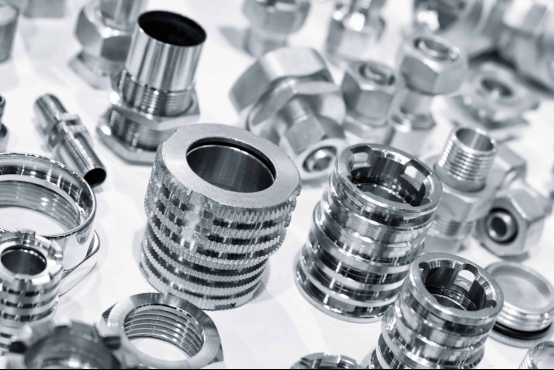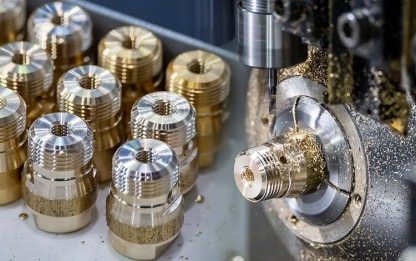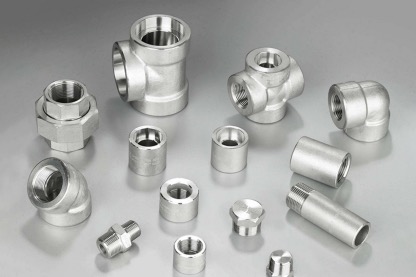
In high-end industrial sectors such as machinery manufacturing, energy equipment, and aerospace, alloy steel forgings, with their excellent mechanical properties, fatigue resistance, and customization, have become the “core framework” supporting the stable operation of critical equipment. Compared to conventional castings or sheet metal parts, alloy steel components formed through forging processes effectively eliminate internal defects such as pores and looseness, resulting in a denser grain structure. They maintain excellent structural stability even under extreme operating conditions (such as high temperature, high pressure, and heavy loads). Therefore, they are widely used in critical components such as wind turbine main shafts, nuclear power flanges, and engineering machinery crankshafts.
I. Core Advantages of Alloy Steel Forgings: Why Are They an Industrial Preferred Choice?
1. Superior Mechanical Properties
Alloy steel, through the addition of alloying elements such as chromium, nickel, molybdenum, and vanadium, already possesses superior strength, toughness, and corrosion resistance compared to carbon steel. Forging processes (such as open forging, die forging, and ring forging) further optimize the material’s internal structure by squeezing the metal blank through external forces. This increases the forging’s tensile strength by 20%-30% and its impact toughness by over 15%, meeting the durability requirements of heavy-duty equipment operating over a long period of time.
2. Strong Customization
Alloy steel forgings can be fully customized, from material formulation to structural dimensions, to meet the specific needs of various industries. For example, main shaft forgings in the wind power industry require 42CrMo alloy steel, using multiple forging passes to ensure stress-free shafts exceeding one meter in diameter. Engine turbine disc forgings in the aerospace industry utilize GH4169 high-temperature alloy, which maintains stable performance even at temperatures exceeding 1000°C.
3. Lower Long-Term Costs
Although alloy steel forgings have a higher initial purchase cost than conventional machined parts, their low failure rate and long service life (typically 3-5 times that of castings) significantly reduce equipment downtime. For example, using Mn13Cr2 alloy steel forgings for crusher tooth plates in mining machinery can extend the replacement cycle from 3 months to 18 months, reducing overall operating and maintenance costs by over 40%.
II. Main Application Areas of Alloy Steel Forgings
1. Energy Equipment
Wind power equipment: Forgings such as main shafts, hubs, and flanges must withstand the enormous torque and alternating loads transmitted by the blades. Common materials used are 42CrMo and 34CrNiMo6.
Nuclear power equipment: Reactor pressure vessel flanges and steam generator tube sheets require extremely high radiation resistance and sealing properties. SA508Gr.3Cl.2 alloy steel is often used.
Thermal power equipment: Steam turbine rotors and generator main shafts must withstand high temperatures and high pressures. Heat-resistant alloy steels such as 25Cr2NiMo1V are commonly used.
2. Construction Machinery
Key load-bearing components such as excavator booms and arms, loader front frames, and crane turntables all rely on high-strength alloy steel forgings. These forgings require a balance of strength and toughness. Common materials used are Q690 and NM450. The isothermal forging process allows for the formation of complex structures in one step, reducing subsequent processing.
3. Transportation
Automotive Industry: Heavy-duty truck axles and steering knuckles utilize 20CrMnTi alloy steel forgings. Carburizing increases surface hardness to ensure driving safety.
Rail Transportation: High-speed train axles and wheelsets must meet fatigue resistance requirements under high-speed operation. 30CrNiMo8 alloy steel is often used, and rigorous non-destructive testing (UT and MT) is required after forging.
III. How to Choose High-Quality Alloy Steel Forgings?
1. Clear Material and Process Standards
First, determine the alloy material based on the application scenario (e.g., 9Ni steel for low-temperature resistance, Mn13 for wear resistance), and require the supplier to provide material analysis reports (e.g., spectral analysis reports). Also, ensure that the forging process complies with industry standards. For example, for die forgings, check for flash removal, and for ring forgings, confirm that the roundness error is within the allowable range (usually ≤0.5mm/m).
2. Verifying the Quality Inspection Report
High-quality alloy steel forgings must undergo multiple quality inspections:
Internal Quality: Ultrasonic testing (UT) is used to detect internal defects, with a standard not lower than Level III of GB/T 6402-2022.
Surface Quality: Magnetic Particle Testing (MT) or Penetrant Testing (PT) is used to inspect for surface cracks. Detrimental defects larger than 0.2mm are not permitted.
Mechanical Properties: Tensile and impact test results must meet design requirements. For example, the tensile strength of 42CrMo forgings must be ≥1080MPa, and the impact energy (-20°C) must be ≥47J.
3. Select Suppliers with Full-Supply Chain Capabilities
Preferably, manufacturers with a complete production line encompassing “smelting – forging – heat treatment – finishing” are selected. These companies can better control quality at every stage. For example, some leading suppliers use a dual process of vacuum induction melting (VIM) and electroslag remelting (ESR), which can control the oxygen content in steel to below 15ppm, significantly improving the purity of forgings.
IV. Industry Trends in Alloy Steel Forgings: Green and Intelligent
With the advancement of the “dual carbon” goals and the upgrade of Industry 4.0, the alloy steel forging industry is developing in two directions:
Green forging technology is becoming increasingly popular: isothermal forging and near-net-shape forging are used to reduce material waste, and waste heat recovery systems are used to reduce energy consumption. Some companies have achieved a 15%-20% reduction in energy consumption in the forging process;
Intelligent production upgrades: digital twin technology is introduced to simulate the forging process, and industrial robots are used to handle and inspect forgings, enabling real-time monitoring of production data to ensure consistent quality for each forging.
Whether in the energy, engineering, or transportation sectors, selecting the right alloy steel forgings is key to improving equipment performance and lifespan.