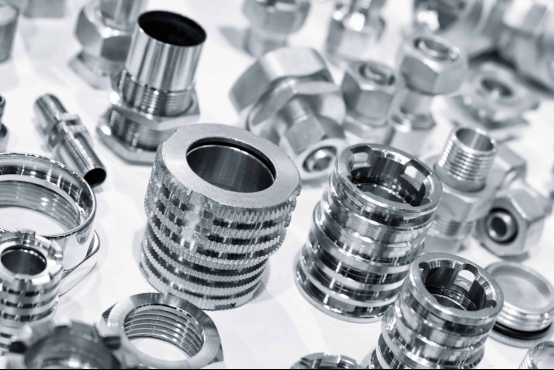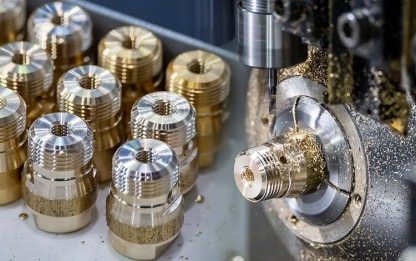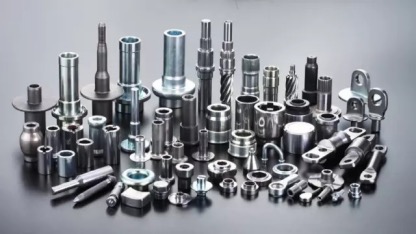
Cold forging is a key technology in the field of metal plastic processing. It involves applying high pressure to a metal blank below the metal’s recrystallization temperature (typically room temperature or slightly above, but significantly below the recrystallization temperature) to induce plastic deformation and achieve the desired shape, size, and surface quality. This process, which eliminates the need for high-temperature heating, significantly improves the dimensional accuracy, surface finish, and mechanical properties (such as strength and hardness) of forged parts. It is widely used in industries with demanding precision, such as automotive, electronics, and medical devices.
I. Core Principles of Cold Forging
Cold forging essentially utilizes the plastic deformation capacity of metals at low temperatures. Static pressure (typically several times the material’s yield strength) is applied to the blank through a die, forcing the metal atoms to slide in specific directions, ultimately forming a shape that conforms to the die cavity. Its key principles and advantages stem from the following two points:
1. Work hardening effect: During low-temperature deformation, metal internal dislocation density increases, resulting in a significant increase in hardness and strength (for example, the strength of low-carbon steel can increase by 50%-100% after cold forging), allowing components to meet their load-bearing requirements without the need for additional heat treatment.
2. High-precision forming mechanism: During cold forging, the metal billet is free from high-temperature oxidation, thermal expansion and contraction, and die precision is directly transferred to the forging , enabling dimensional tolerances within ±0.05mm and surface roughness (Ra) as low as 0.4-1.6μm, achieving near-net shape or even net shape (without the need for subsequent cutting).
I. Key Elements of the Cold Forging Process
Cold forging requires far more control over process parameters than hot forging. Four key elements require precise control; failure to do so can easily lead to billet cracking, die damage, or scrapped forgings:
l Blank Material:Choose metals with good plasticity and a low yield-to-strength ratio (such as low-carbon steel, pure aluminum, and copper). Avoid high-carbon steel and high-alloy steel (which have poor low-temperature plasticity and are prone to cracking).
l Lubrication Conditions:A uniform, wear-resistant lubricating film must be formed between the blank and the die to reduce the friction coefficient.
l Deformation Amount and Speed:The single deformation must be within the material’s tolerance to avoid excessive deformation that may cause cracking. The deformation speed should be moderate.
l Mold Design and Lifespan:The die should be made of high-strength, wear-resistant material (such as high-speed steel or cemented carbide) and undergo surface strengthening treatments. The die cavity should be designed with appropriate corner radius and draft angle.
II. Typical Cold Forging Process
The cold forging production process revolves around “blank pretreatment – multi-pass forming – post-processing,” with emphasis on precision and surface quality control at every step. The specific steps are as follows:
1. Blank Preparation
l Material Selection: Preferred materials with excellent ductility, such as low-carbon steel (such as 10# and 20# steel), pure aluminum (1050A), and red copper (T2), must undergo cold rolling or cold drawing to ensure a uniform grain structure.
l Blanking: High-precision blanking equipment is used to cut the blanks, ensuring a diameter tolerance of ≤±0.1mm and a weight error of ≤±1% to avoid missing or excessive material in the forging.
l Pretreatment:
Annealing: Low-temperature annealing is performed on hardened blanks (such as cold-drawn steel) to reduce hardness, eliminate internal stress, and improve ductility.
Surface Treatment: Pickling is used to remove surface oxide scale, followed by phosphating (forming a 5-10μm phosphate film to enhance lubrication and adhesion), followed by soaking in a saponifying solution (forming a lubricating film).
2. Cold Forging
l Preforming: Depending on the complexity of the forging, multiple preforming passes (such as upsetting, reducing, and punching) are used to adjust the blank’s shape, ensuring more uniform metal flow and avoiding localized stress concentration during final forging (for example, cold forging a bolt requires pre-upsetting the head before final upsetting).
l Final Forming: The preformed blank is placed in the final forging die. High pressure is applied by a high-speed press to force the blank into the die cavity, achieving the final shape.
l Shaping (Optional): For forgings requiring extremely high precision (such as automotive fuel system parts), a shaping step is added to correct dimensional deviations using gentle pressure, further improving accuracy.
3. Post-Processing
l Deburring: Vibration grinding, electrochemical deburring, and other methods are used to remove fine burrs from the forging’s edges to prevent impact on assembly accuracy.
l Degreasing: Ultrasonic cleaning removes residual lubricant from the forging’s surface, preventing oil stains during subsequent processing. Heat Treatment (Optional): For forgings requiring further strength improvement (such as high-strength bolts), carburizing and quenching are combined with low-temperature tempering. For forgings requiring reduced hardness (such as parts requiring subsequent machining), low-temperature annealing (to eliminate work hardening) is performed.
l Inspection: Dimensional accuracy is checked using a three-dimensional coordinate measuring machine, internal structure is examined using metallographic analysis, and mechanical properties are verified through tensile testing to ensure that the forgings meet standards.
III. Main Classifications of Cold Forging Processes
Depending on the shape and forming method of the forging, cold forging can be divided into the following five categories, each with its own application focus:
Cold Heading: Primarily used for forming axisymmetric parts (such as bolts, nuts, and rivets), it uses axial pressure to upset the blank. Its advantages include high production efficiency and suitability for large-scale production.
Cold Extrusion: This is divided into forward extrusion (where the metal flow direction is aligned with the pressure direction, such as in shaft-shaped parts), reverse extrusion (where the metal flow direction is opposite to the pressure direction, such as in cup-shaped parts (bearing rings), and combined extrusion (a combination of forward and reverse extrusion, such as in complex cup-stem parts). This process can form complex hollow or solid parts. Cold Drawing: Metal billets (such as wire or tube) are drawn through die holes to form high-precision, long products (such as cold-drawn steel wire and precision steel tubes) with an exceptionally smooth surface finish.
Cold Stamping: Patterns, logos, or microstructures (such as coin designs or part numbers) are embossed onto metal surfaces without removing material, making it suitable for surface decoration or information marking.
Cold Heading-Extrusion Composite Process: Combining the advantages of cold heading and cold extrusion, it is used to form complex parts (such as automotive transmission gears and engine valve guides), reducing forming passes and improving production efficiency.
IV. Applications of Cold Forging
Due to its high precision and cost-effectiveness, cold forging is widely used in applications requiring miniaturized, lightweight, and highly reliable components:
Automotive Industry: Accounts for over 70% of all cold forged parts, such as engine valve tappets, transmission synchronizer sleeves, chassis bolts/nuts, and fuel injection system nozzles.
Electronics and Home Appliances: Precision connector pins, air conditioning compressor pistons, and mobile phone midframes (cold forging magnesium alloys to achieve lightweight and high strength). Medical devices: Surgical instruments (such as hemostats and tweezers; stainless steel cold forging eliminates the need for cutting, avoiding sanitary blind spots); artificial joint components (titanium alloy cold forging improves surface finish and biocompatibility).
Fastener industry: High-strength bolts, nuts, and rivets (cold forging aluminum or copper for high production efficiency and suitability for automated assembly).
V. Development Trends in Cold Forging Technology
With the increasing demands for precision and efficiency in high-end manufacturing, cold forging technology is innovating in the following directions:
1. Material Expansion: Breaking through the cold forging bottleneck of high-hardness materials, developing cold forging technology for high-strength steel (such as hot-formed steel), titanium alloys, and magnesium alloys (through pre-softening treatment and multi-pass forming), to meet the lightweighting needs of new energy vehicles and aerospace.
2. Intelligent Production: Introducing CNC cold forging presses and robotic automatic loading and unloading systems, combined with AI algorithms to optimize forming parameters (such as real-time adjustment of pressure and speed), achieving “unmanned” production; using machine vision to inspect forging dimensions online to ensure 100% quality assurance.
3. Mold Technology Upgrades: Develop ultra-wear-resistant mold materials (such as ceramic-based composites), 3D-printed molds, and incorporate mold temperature control systems (to prevent mold overheating and wear during cold forging) to extend mold life.
4. Green Processes: Optimize lubrication solutions and use environmentally friendly lubricants to reduce pollution; promote “one-step forming” processes to reduce energy consumption and material waste.
In summary, cold forging is a core technology for achieving “high-precision, high-efficiency, and low-cost” production of metal components. Its development directly promotes miniaturization and lightweighting in high-end manufacturing. Understanding the principles, processes, and applications of cold forging is crucial for understanding technological trends in the modern metalworking industry.